Golfvante guideGolf Glove Claims
Here we help you understand what qualifies as a claim, what is considered normal wear and tear, and how to submit a case.
Read this firstIs it a valid claim?
Golf gloves are wear items. Their lifespan is affected by grip, use, weather, moisture, fit, and how the glove is stored.
Yes, usuallyFaults that appear immediately, such as a seam coming apart during the first use or a clear material or manufacturing defect.
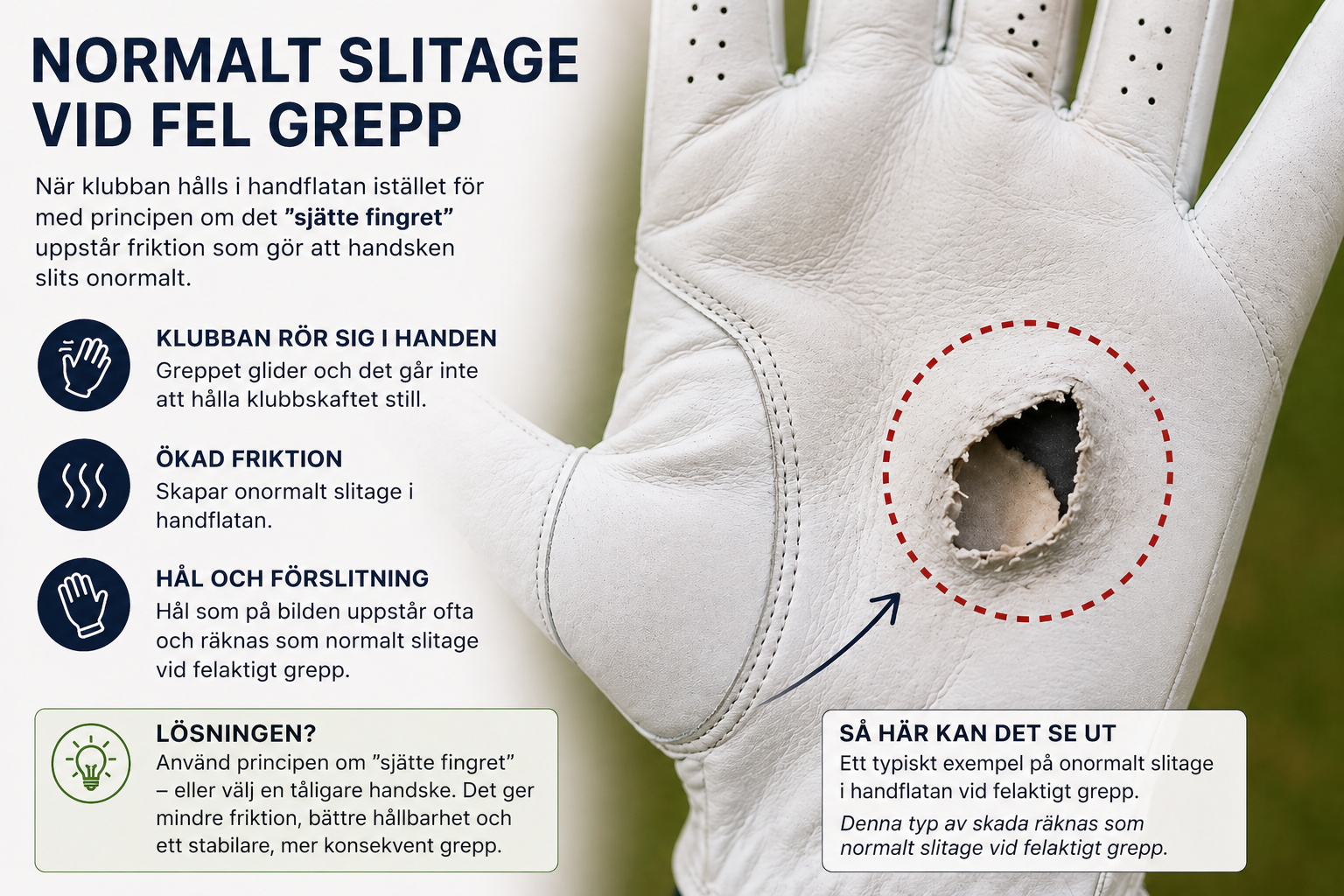
No, usually notHoles, abrasion, or wear after playing, especially in the palm, thumb, or seams that have come apart after extended use.
GoodwillAfter limited use
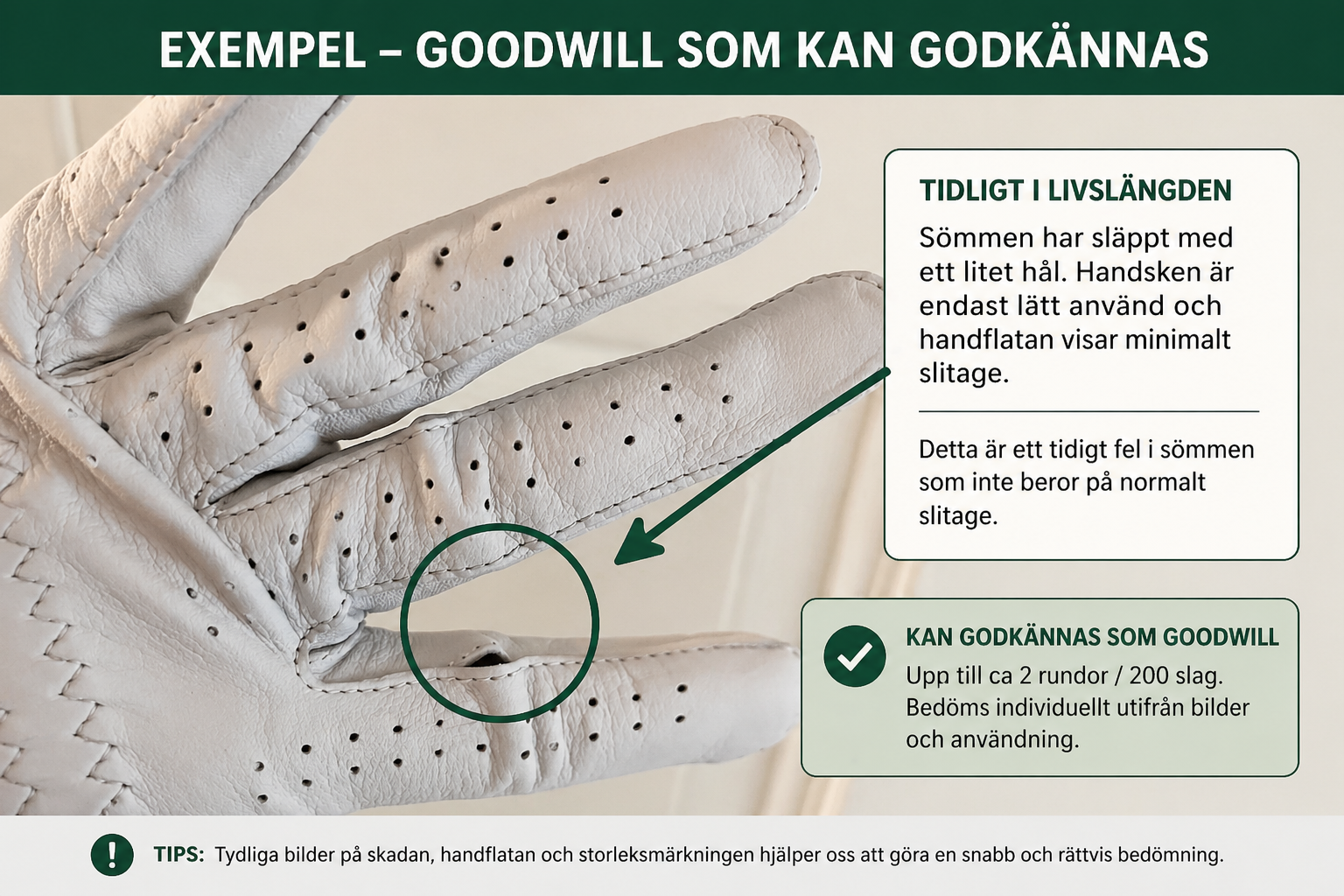
If the glove has only been lightly used – up to approximately 200 shots – we may, in some cases, be able to help as a gesture of goodwill. Each case is assessed individually.
After more than approximately 200 shots, goodwill normally does not apply to seams or wear, as material or manufacturing defects usually become apparent early on.
Our guidelineWhy 200 shots?
A golf glove with an actual material or manufacturing defect will generally show signs of the problem during the first use or within the first few shots.
We therefore use approximately 200 shots as a guideline to distinguish between a valid claim and normal wear and tear.
What affects lifespan?
Friction from the grip, grip pressure, moisture, weather, fit, and storage all affect how long a golf glove lasts.
Different materials behave differently:
Cabretta leather
Maximum feel and grip, but more sensitive to wear.
Synthetic (Dura Goat)
More durable and resistant to weather and use.
Our aim is always to make a fair and consistent assessment – based on how a golf glove is actually used during play.
Why does a golf glove wear out?
A golf glove is exposed to friction with every shot. If the club moves in the hand, wear occurs, often in the same spot.
In most cases, this is caused by the grip, not the glove.
For the best durability, the club should sit in the fingers – not in the palm.
Read & see how to do it:
Examples of our assessment
We can helpA seam has come apart early and the glove otherwise looks almost new.
Normal wear and tearHoles, abrasion, or clear signs of wear after playing.
Submit a case
Email [email protected] and include:
- A photo of the damage
- A photo of the entire palm
- A photo of the closure tab
- A photo of the size label
- Your order number
- A description of how much the glove has been used
Clear photos help us process your case faster.